

Egypt Desert Adventures
Multi-day desert routes through Egypt's quieter and more remote landscapes, built for travelers who want distance, open terrain, and a very different rhythm from the country's main historical circuit.
What Egypt looks like away from the river
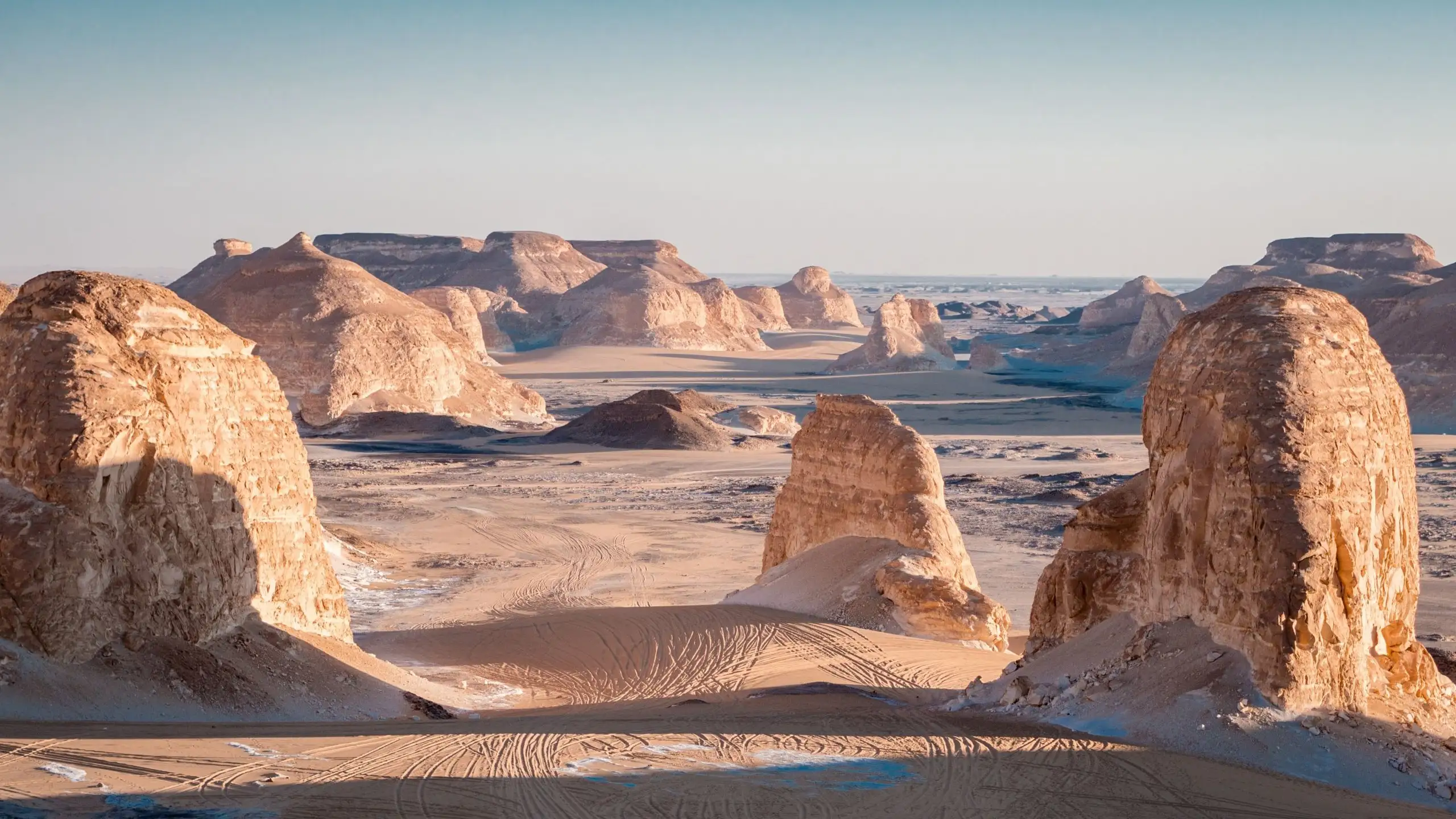
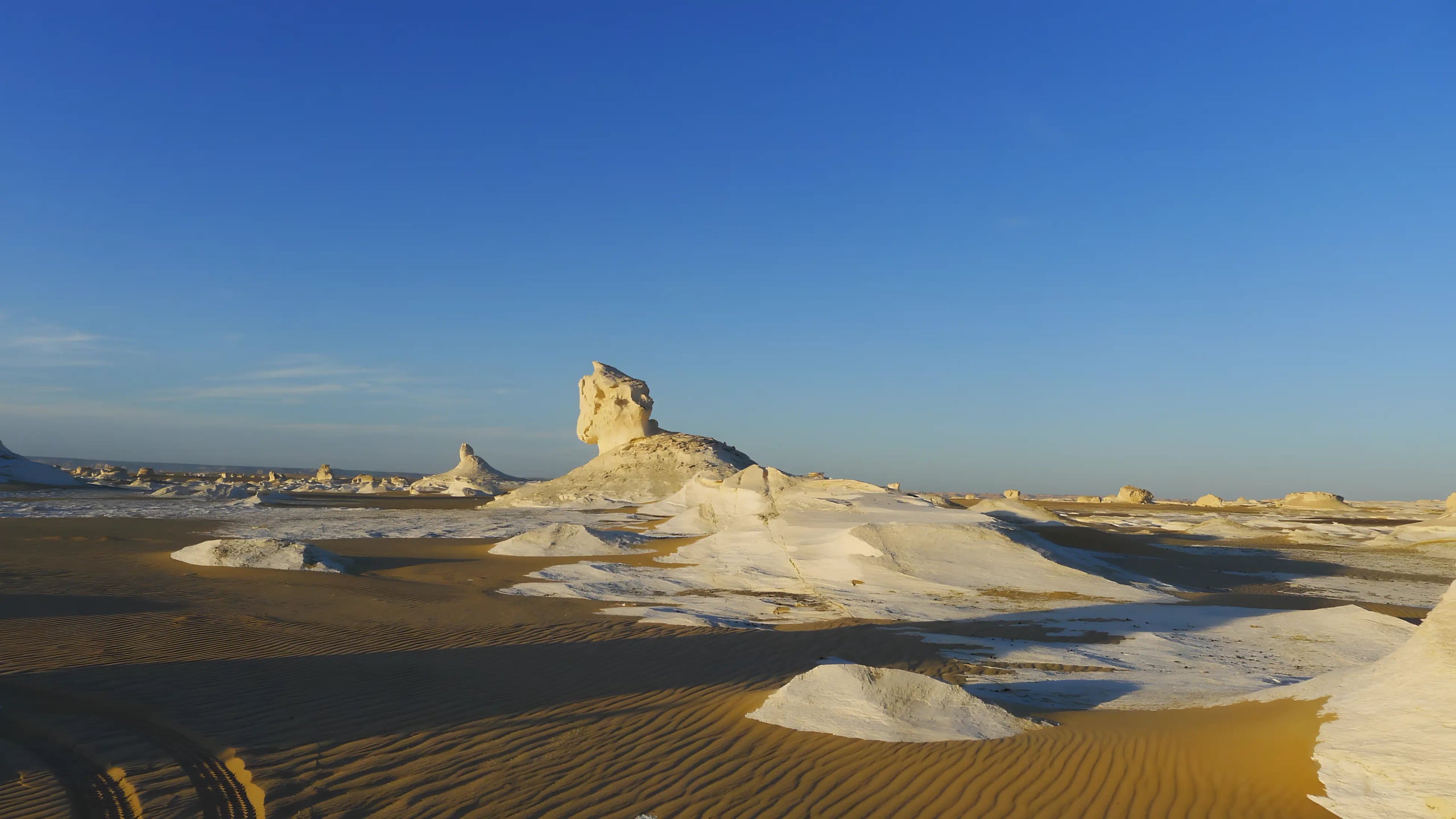
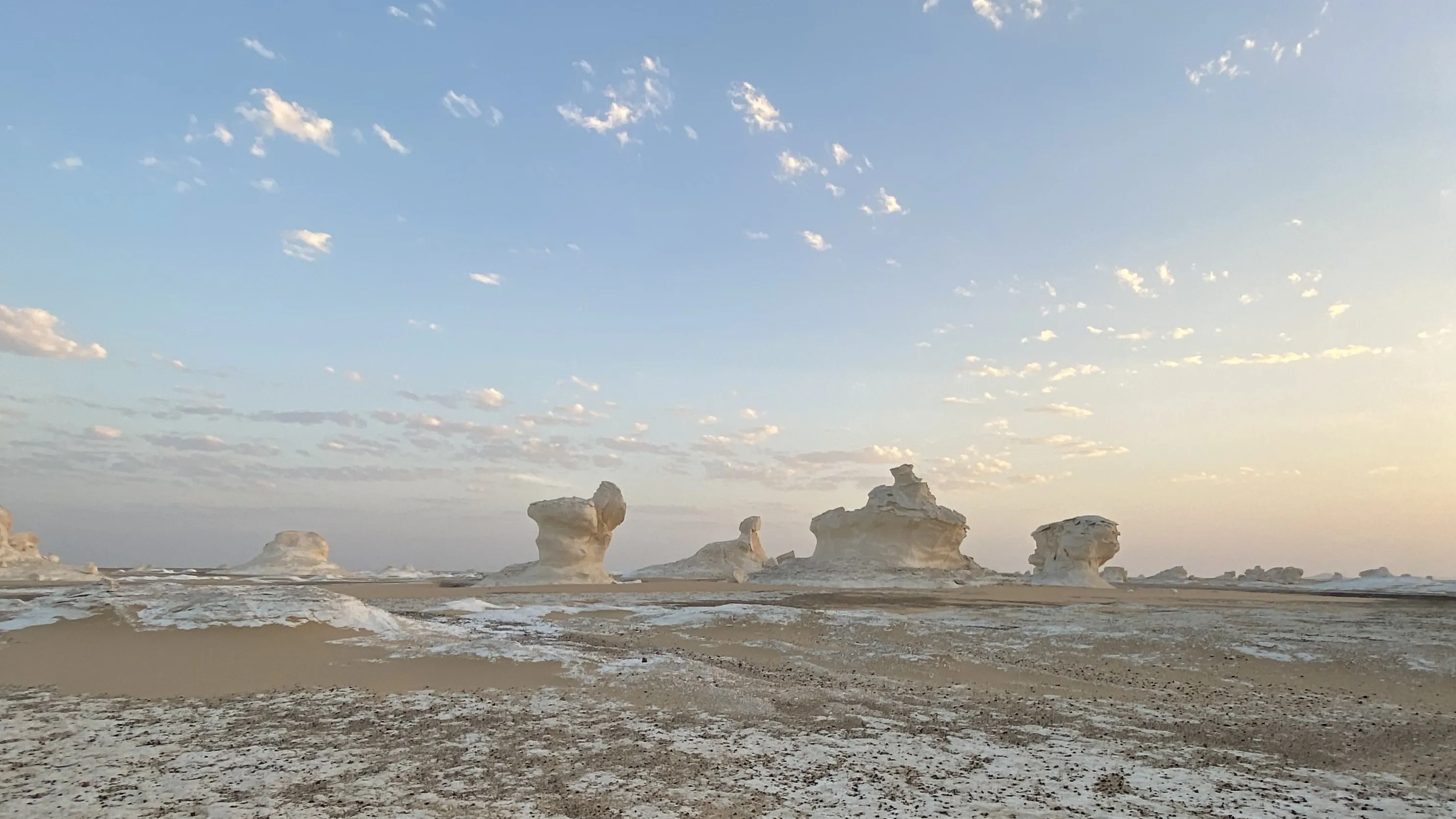
The Egypt most travelers see follows a tight corridor: Cairo, Luxor, Aswan, with the Nile as the organizing spine. The desert that surrounds it is larger, older, and much less visited. Our desert programs go into that terrain: chalk formations that look like nothing else on the continent, oasis depressions tucked into the Western Desert plateau, and the quieter agricultural landscape of the Faiyum basin.
These are not day trips. Each program involves at least one overnight in the field: simple desert camps, sleeping under open sky, with early starts built around the best light and the coolest hours. The tradeoff is real: long drives from Cairo, basic comfort, and terrain that asks more physically than a temple tour. The payoff is proportional.
If you are unsure which format fits, the individual program pages explain the route, pace, and physical demands clearly. You can also build a custom desert itinerary if you want something that combines multiple areas or extends further into the Western Desert.
Choose your desert
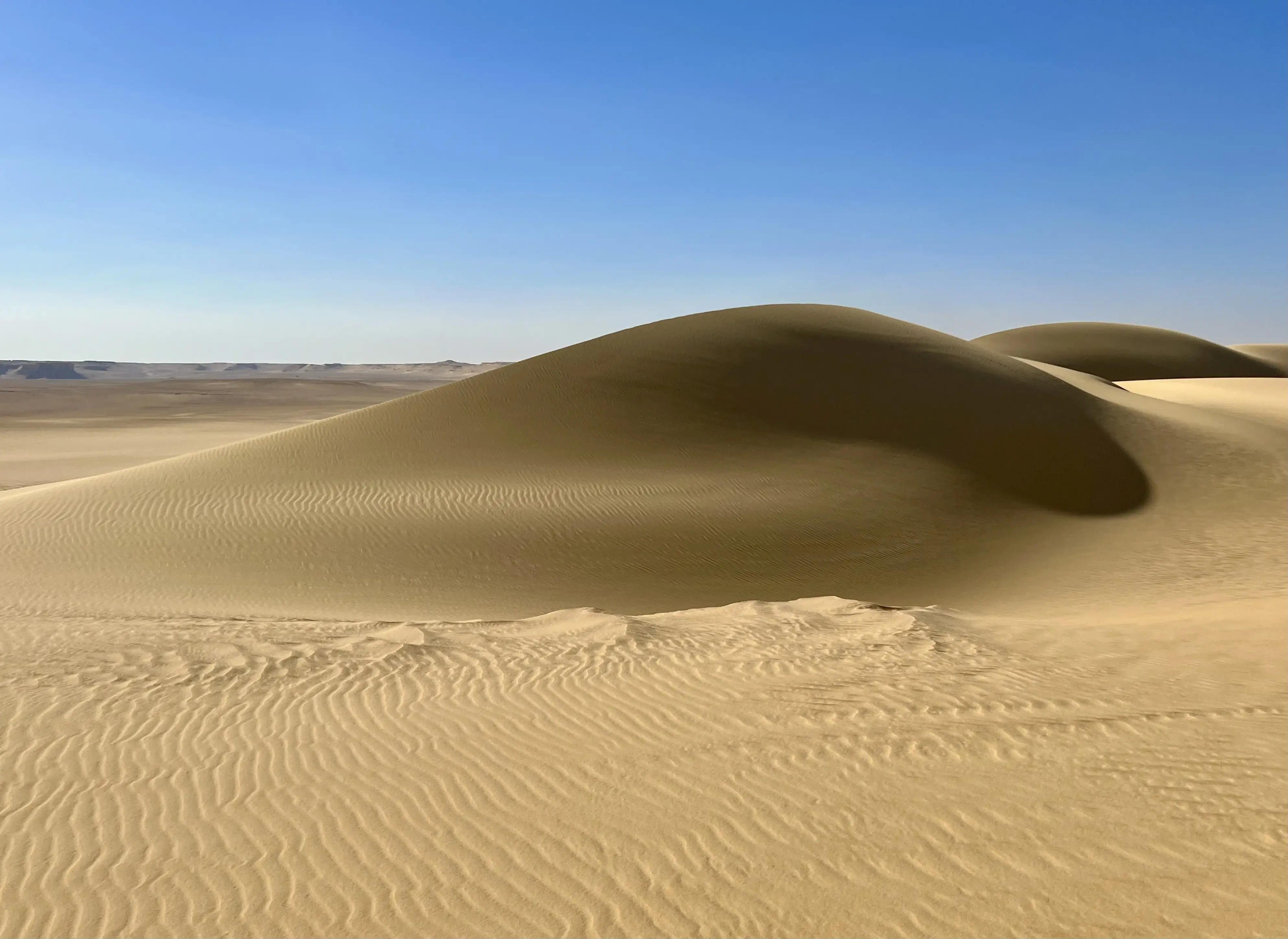
The Western Desert and the Faiyum sit far apart geographically and feel very different on the ground. One is remote plateau and white chalk landscape; the other is an oasis basin a short drive from Cairo.
Planning a desert adventure in Egypt
These programs require more preparation than a standard Egypt tour. These answers help you judge whether they fit your trip and what to expect on the ground.
Ready to plan a trip that fits you?
Start with a program, shape something more personal, or reach out if you want help choosing the right destination and pace.
Travelers Hosted
Curated Programs
Years of Experience
Average Rating