

Farafra Oasis: What to Know Before You Go Beyond the White Desert
Farafra is one of the quietest ways into Egypt's Western Desert, where the town matters less as a destination in itself than as the threshold to a very different landscape.
June 21, 2026
Farafra is not the kind of oasis people imagine first
Farafra does not arrive with the same recognition as Siwa or the same obvious monument pull as Luxor. That is part of its value. It sits on the edge of one of Egypt's strangest landscapes and works best for travelers who care about silence, scale, and the feeling of moving beyond the country's more familiar historical corridor.
Farafra is easy to misunderstand if you expect an oasis to behave like a compact sightseeing town. It is quieter than that, smaller in feel, and more valuable as a transition point into the Western Desert than as a polished stand-alone stop with constant attractions. For the right traveler, that is exactly why it stays memorable.
Where Farafra sits in an Egypt route
Farafra lies deep in Egypt's Western Desert, in the New Valley Governorate, and most travelers encounter it as part of a wider desert route rather than as an isolated detour. If Cairo represents density and the Nile represents continuity, Farafra represents distance. The approach itself changes the trip. Long road stretches, fewer settlements, and more open ground shift the mood before you reach the main desert sites.
That is why Farafra usually makes the most sense when it is tied to a route through the Western Desert. It is less about arriving at a famous oasis center and more about entering the terrain that unfolds around it.
What Farafra actually feels like
Farafra is quieter and more stripped back than many travelers expect. The atmosphere is not built around heavy urban life or crowded visitor infrastructure. It feels smaller, slower, and closer to the desert line itself. That can be a relief for travelers who want space and a break from Egypt's busier historical centers. It can also feel underwhelming if what you really want is a destination with a long list of stand-alone urban sights.
This is the key to judging Farafra well: it is a place of threshold and atmosphere. You do not go there for nonstop activity. You go because the edge between oasis life and the White Desert landscape is part of the appeal.
Why the White Desert changes the equation
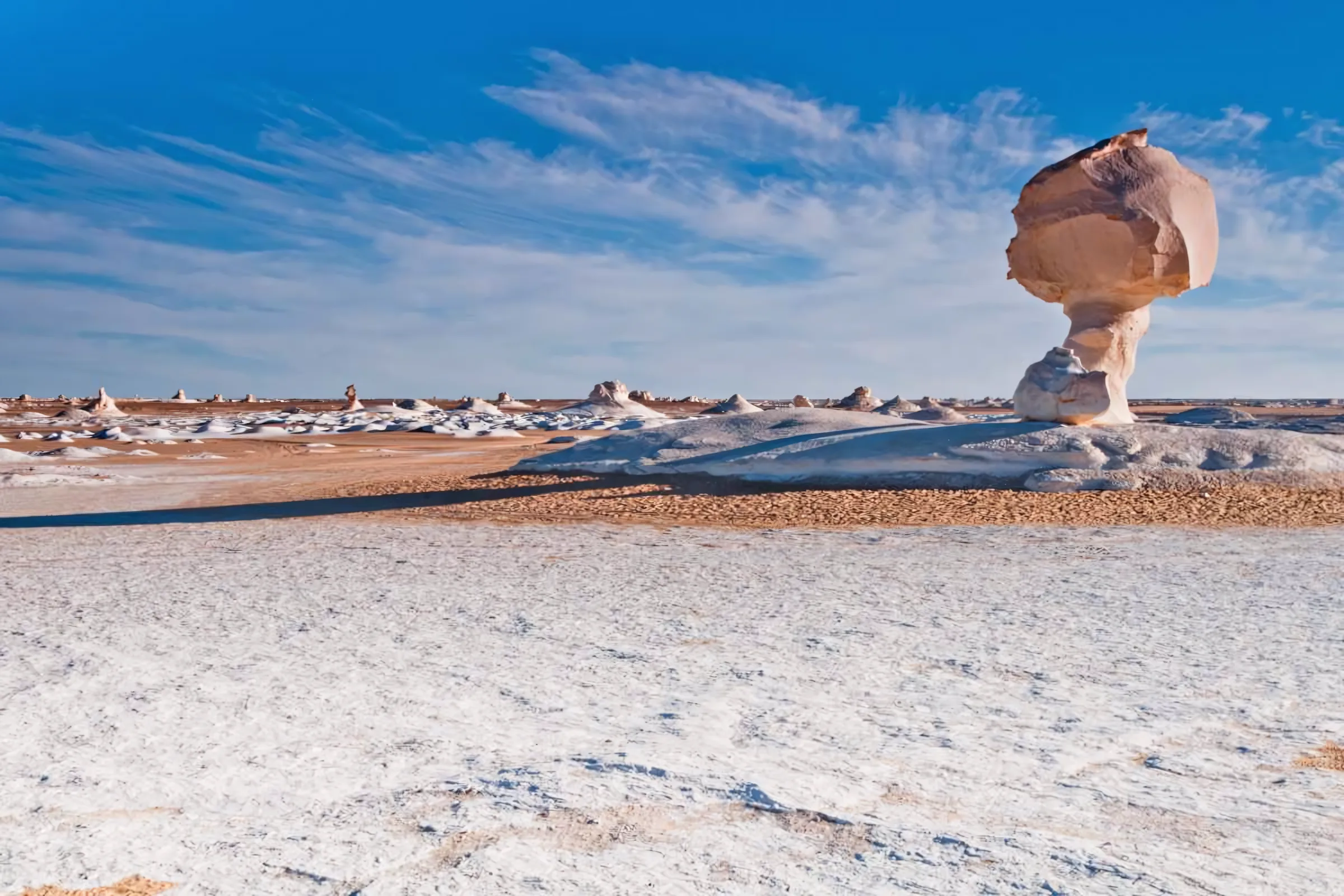
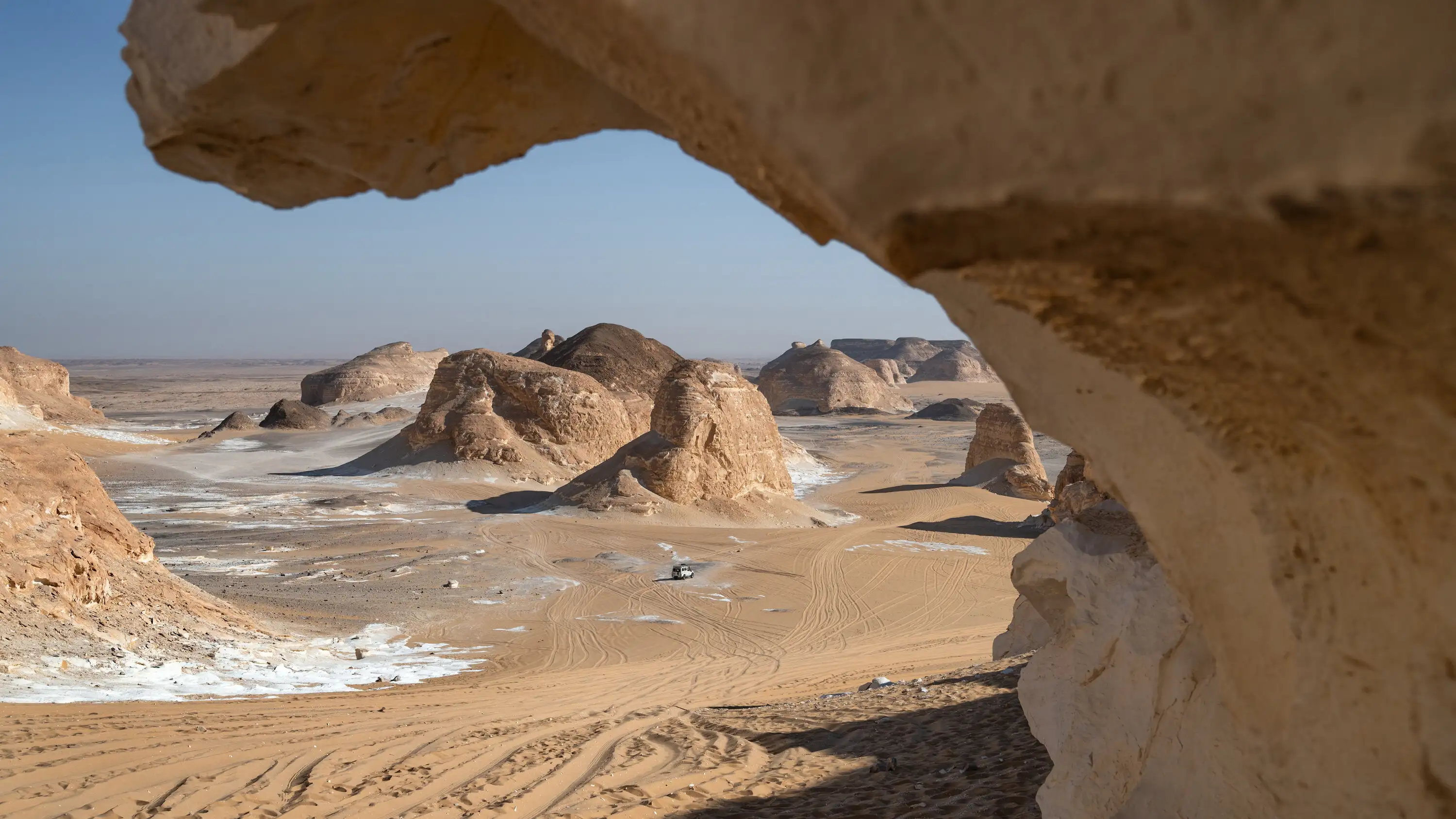
Farafra is tied closely to the White Desert because the surrounding landscape is the real argument for going. The chalk formations, long open horizons, and changing color of the ground give this part of Egypt a visual language that feels entirely separate from the Nile Valley. Many travelers first think of the White Desert itself, but Farafra matters because it helps shape the practical and emotional approach to that environment.
In other words, Farafra is not competing with the White Desert. It is part of the way the White Desert lands properly. Without that wider desert context, the place can seem too quiet. With it, the oasis starts to make sense.
What is worth noticing beyond the obvious
Travelers who move more slowly tend to notice the things that make Farafra distinct: the quality of the light, the sense of distance from Egypt's main touring corridor, and the simplicity of the settlement itself. Some visitors also make time for local details such as hot springs or the Badr Museum, which gives a more intimate reading of oasis life and desert materials than the dramatic landscapes alone can offer.
None of these are reasons to build a full Egypt trip around Farafra on their own. They are reasons the stop holds more value than a mere fuel break on the way to the White Desert.
Who tends to love Farafra most
- Travelers who enjoy desert silence and wide-open space
- People who want a route to feel different from Egypt's main historical circuit
- Travelers who care about atmosphere as much as headline monuments
- Photographers and landscape-focused travelers
- People already considering a multi-day Western Desert route rather than a quick city add-on
Who may find it underwhelming
Farafra can disappoint travelers who want a dense sightseeing stop with constant structure, major stand-alone monuments, or urban energy. It is also not the easiest first desert experience if you do not enjoy long drives, basic surroundings, or the slower payoff of open landscapes. In that case, something softer and closer, like Faiyum, may be the better first contrast from Cairo.
How much time does Farafra need?
Farafra usually works best as part of a broader desert route rather than as a destination that needs many separate days on its own. The real question is less “How long should I stay in Farafra?” and more “What kind of desert route am I building around it?” A shorter White Desert overnight will use the area differently from a deeper multi-day expedition that pushes farther into the Western Desert.
That is why the route matters more than the label. Farafra becomes more rewarding when the sequence around it is right.
So, is Farafra worth it?
Yes, but only for the right reason. Farafra is worth it if you want a quieter and more remote side of Egypt, and if you understand that the place works as part of a desert composition rather than as a self-contained city break. It is not Egypt at its busiest or most theatrical. It is Egypt at one of its outer edges, where space, silence, and geology do much of the work.
If that sounds like what you want, Farafra can become one of the most distinctive parts of the trip.
Programs that make Farafra make sense
These routes are the best match for Farafra because they treat it as part of a real desert sequence, not as a stop that has to carry the whole trip on its own.
Ready to plan a trip that fits you?
Start with a program, shape something more personal, or reach out if you want help choosing the right destination and pace.
Travelers Hosted
Curated Programs
Years of Experience
Average Rating