Understanding Hieroglyphics: A Beginner's Guide
You do not need to learn ancient Egyptian to get more from temple walls. A few simple patterns can turn hieroglyphs from background decoration into something you can actually notice and follow on your trip.
April 28, 2026
A better way to look at temple walls
Many travelers arrive in Egypt expecting hieroglyphs to feel important, but not especially readable. That instinct is right. Most people do not need a formal lesson in ancient Egyptian, yet they do need a better entry point than “these are beautiful symbols.” Without one, temple walls can blur into surface detail and the same scenes start repeating without giving much back.
This guide is meant to fix that. It will not teach you to translate inscriptions, but it will help you recognize what hieroglyphs are doing, where to begin looking, and why the carvings at sites in Luxor, Aswan, and museum collections in Cairo become far more rewarding once a few core ideas click into place.
Hieroglyphs are writing, not decoration
One of the biggest mental shifts for a first-time visitor is understanding that hieroglyphs were not added to temple walls as ornamental texture. They are part of the meaning of the wall. Ancient Egyptian temple decoration joins image, writing, ritual, kingship, and theology so tightly that modern visitors often separate things that were never meant to be separate in the first place.
That matters because it changes how you stand in front of a carved scene. If you think of the signs as mysterious visual noise, the wall stays distant. If you think of them as a real writing system working alongside the figures, the same wall starts to feel organized. You may still not be able to read it, but you stop looking at it as if it were sealed shut.
Hieroglyphs were especially suited to formal and monumental settings. They appear on temple walls, tombs, statues, stelae, and ritual monuments because they could carry language while also projecting permanence, order, and sacred authority. That is one reason they feel so visually rich. Their beauty was not separate from their function.
The three jobs a hieroglyph can do
Travelers often assume each sign equals one object and one meaning. In practice, the system is more flexible than that. You do not need to memorize it in scholarly detail, but it helps enormously to know that a hieroglyph may be doing one of several different jobs at once.
1. A sign can represent a sound
Many hieroglyphs are phonetic. That means they stand for sounds, not just for the thing they depict. A bird may not mean “bird.” A reed may not mean “plant.” A hand may not mean “hand.” These signs can function more like letters or sound groups than like labels.
This is why trying to “guess” a translation from the picture alone usually fails. The image is part of the writing system, but not always the literal content.
2. A sign can represent a whole word or idea
Some signs can work as word signs, meaning the picture stands for the thing itself or for a concept closely tied to it. This is part of what makes hieroglyphs feel so visually intuitive at first glance. Now and then, the image does point more directly toward the meaning. The problem for beginners is that this is only part of the system, not the whole system.
3. A sign can clarify what kind of word came before it
Ancient Egyptian also used signs that help narrow meaning rather than pronounce sound. Modern readers often call these determinatives. They usually appear at the end of a word and signal the category involved: person, place, action, deity, movement, and so on.
That may sound technical, but the practical takeaway is simple: hieroglyphs do not only spell. They also guide interpretation visually. The writing system is doing more than one job on purpose.
How to tell where to begin reading
This is probably the single most useful beginner skill you can learn before walking into a temple. Hieroglyphs do not always run left to right the way English and French do. They can run left to right, right to left, or vertically.
The easiest clue is the direction the human and animal figures are facing. In most cases, they face the beginning of the line. If the birds, seated people, or gods are facing left, you begin from the left. If they are facing right, you begin from the right.
You do not need to read the inscription after that. Even recognizing the direction changes the experience, because the text immediately stops looking like an arbitrary scattering of signs.
- If figures face left, start from the left.
- If figures face right, start from the right.
- If signs are stacked, they are often read from top to bottom within grouped units.
- Signs are arranged to look balanced, so visual neatness does not always mean the reading order is obvious at first glance.
What most travelers can realistically spot first
You do not need to build your first temple visit around translation. A better goal is to become good at noticing repeated visual patterns that tell you what kind of inscription or scene you are looking at.
Cartouches
The cartouche is one of the easiest and most satisfying features to spot. It is the oval loop, tied at one end, that encloses a royal name. Once you learn to notice it, you start seeing where kings are being named very deliberately on walls and monuments.
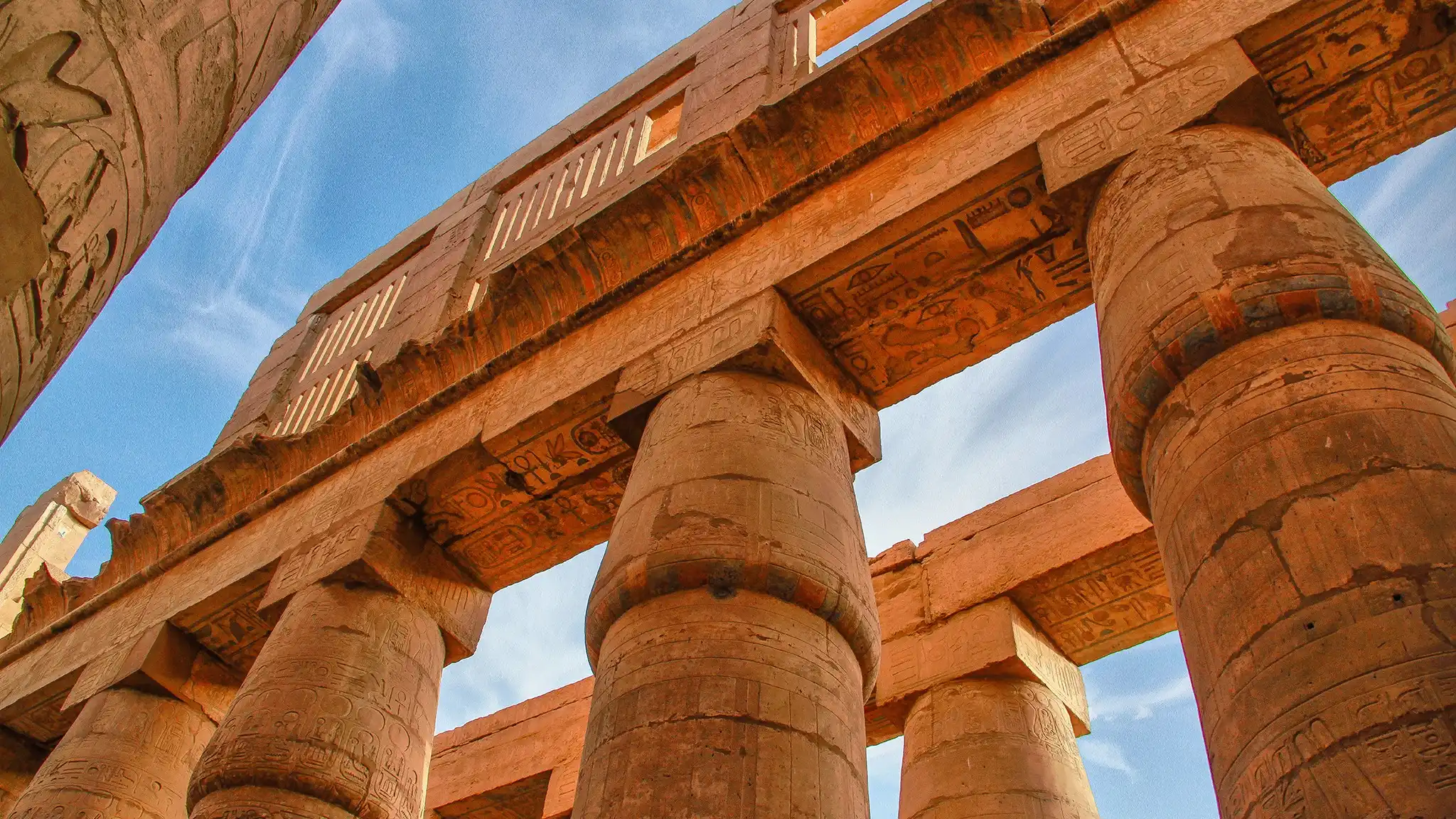
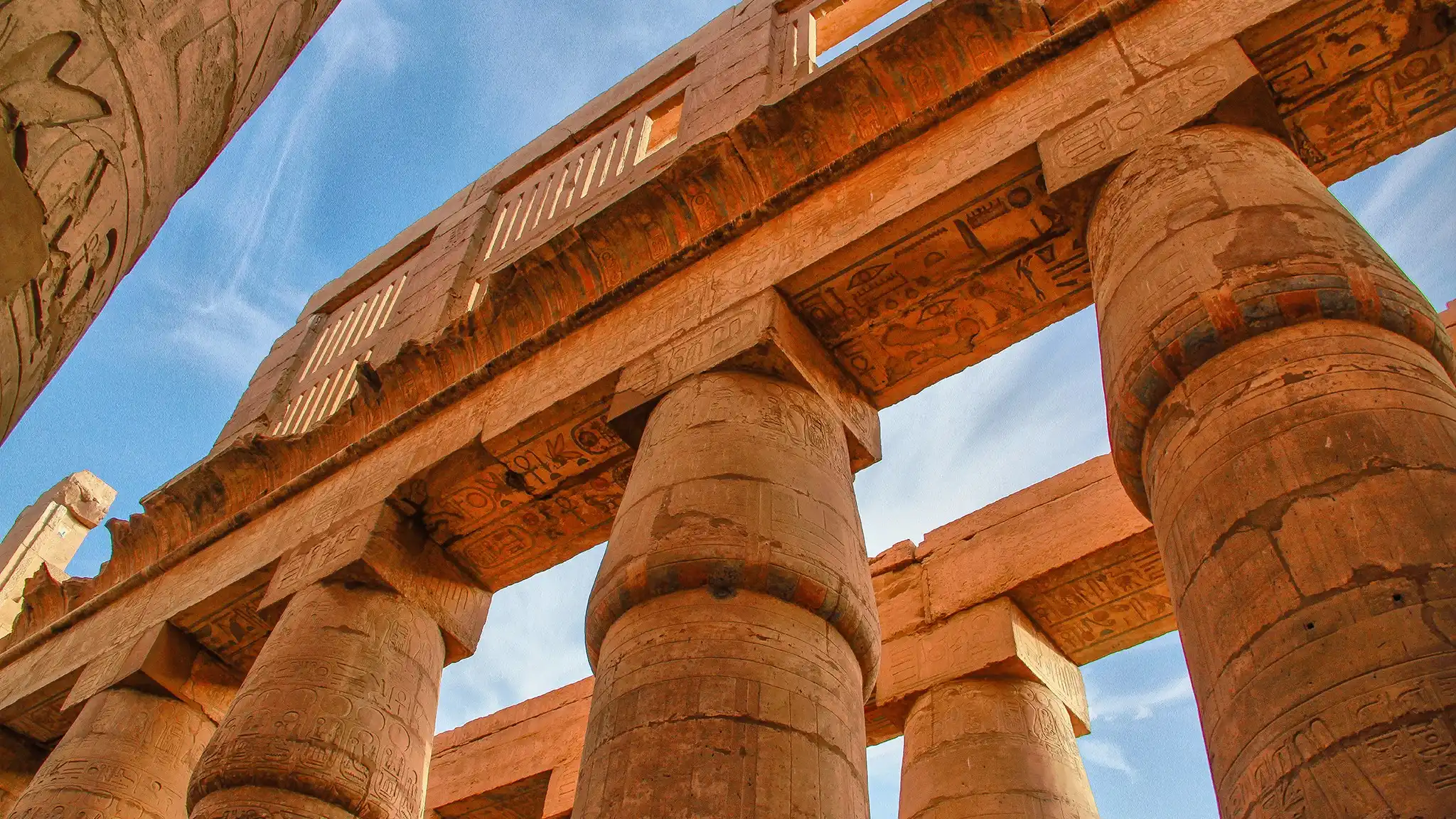
Even if you cannot read the signs inside, the cartouche helps you identify moments where royal identity is central. At many sites in Luxor, repeated cartouches are one of the quickest ways to see which ruler left the strongest mark on a section of temple.
Kings and gods in formal encounter
One of the most common carved scenes in Egyptian temples shows a ruler facing a god or goddess. The king offers incense, wine, flowers, food, or ritual gestures. In return, the deity grants life, power, legitimacy, or divine favor. The same basic setup appears again and again because temples were not trying to tell a personal travel story. They were asserting sacred order.
The hieroglyphs in these scenes support that function. They identify names, titles, offerings, blessings, and relationships. If you notice the repeated structure of king, deity, offering, and inscription, the wall becomes much less overwhelming.
Titles and repeated formulae
Ancient Egyptian inscriptions often repeat official titles and standard phrasing. That repetition is helpful. It means walls are not endlessly inventing new material. They rely on recognizable formulae. A king is named in predictable ways. Gods are invoked with familiar titles. Offerings and ritual acts are framed in recurring language.
This is part of why guides can point to certain groups of signs with such confidence. They are not improvising from scratch every time. Temple writing is full of patterned structure.
Grouping and visual hierarchy
Important figures are usually larger. Major names are emphasized. Central ritual moments take visual priority over secondary attendants or decorative filler. If you step back before you step in, a wall often becomes easier to understand. Hieroglyphs are not floating independently of the scene. They belong to a composition with hierarchy and intent.
Why temple walls repeat the same kinds of scenes
Many first-time visitors quietly wonder why so much of Egyptian temple art seems repetitive. That question is reasonable, and the answer is useful. Temples were not built mainly to entertain the eye with endless novelty. They were ritual, political, and theological spaces. Repetition was part of how they worked.
When you see a king making offerings to a god in one chamber and then again in another, that is not necessarily evidence that the artists lacked imagination. It is evidence that the temple is asserting a pattern of relationship that mattered deeply: ruler, deity, offering, order, legitimacy, cosmic stability.
The writing reinforces this. A wall is often less like one page of a storybook and more like one formal declaration within a larger sacred system. Once you accept that, repetition stops feeling like redundancy and starts feeling like emphasis.
Where this becomes easiest to notice in Egypt
Some places reward this kind of preparation more than others. If you want to feel the benefit of this article quickly, look for sites where inscriptions are abundant, clear, and repeated across large surfaces.
Luxor
Luxor is one of the best classrooms in the country for beginners. Karnak and Luxor Temple give you repeated royal names, offering scenes, architectural sequence, and enough preserved surface to start recognizing patterns from one wall to the next. The more time you spend on the East Bank, the more likely those repetitions are to begin making sense instead of washing over you.
Edfu, Kom Ombo, and Philae
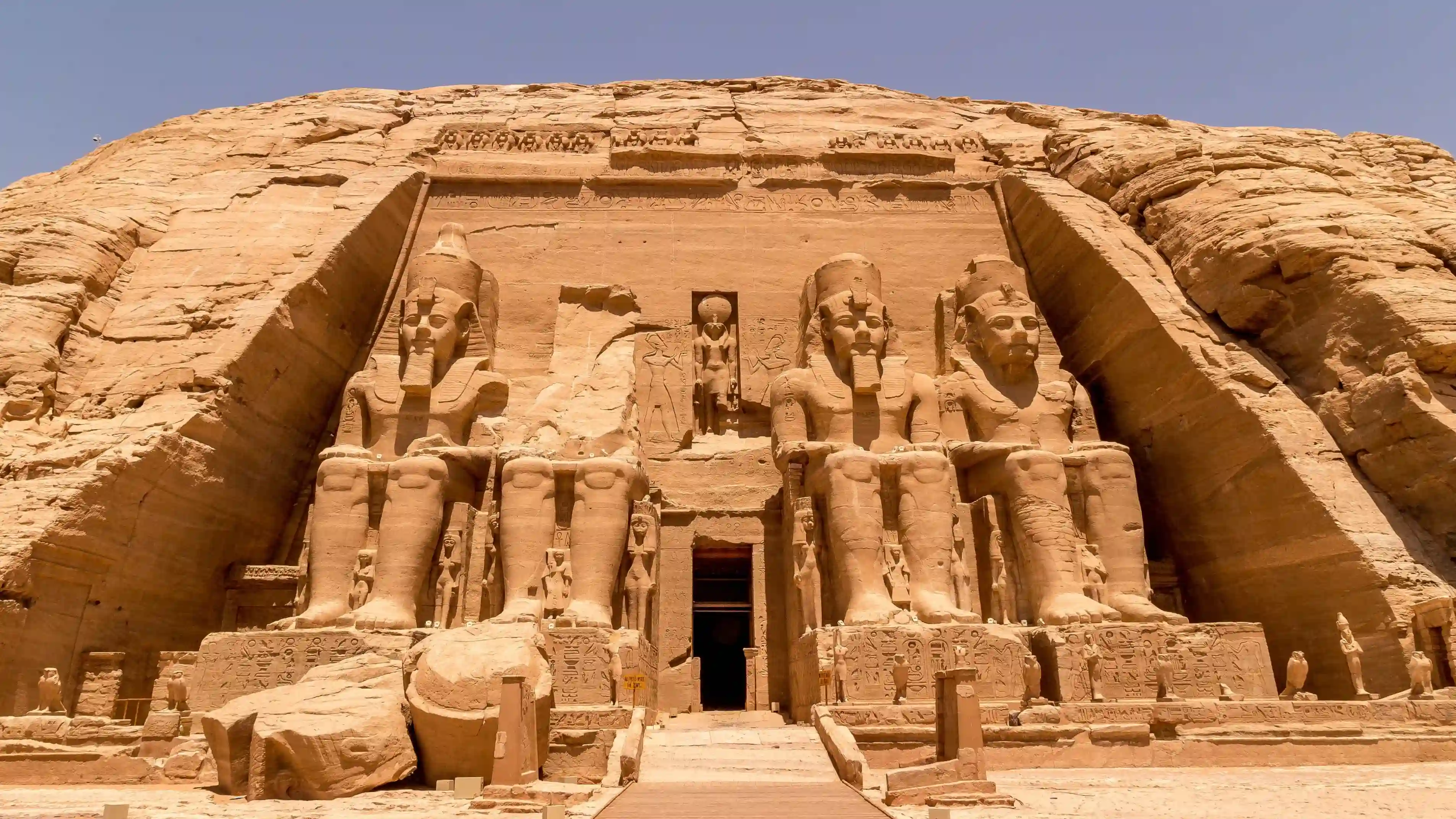
These temples are especially rewarding because their decorative programs are strong enough, and in some places well-preserved enough, for non-specialists to see recurring structure clearly. At Edfu you feel the concentration of formal temple language. At Kom Ombo you notice how symmetry and doubled structure shape the site. At Philae, inscription, image, and setting work together in a way that is visually memorable even before you understand much detail.
Cairo museums
Museum collections in Cairo help in a different way. They let you slow down. You can stand in front of stelae, statues, coffins, and relief fragments without the scale and glare of a temple complex pushing you along. For some travelers, this is where the first real visual confidence begins.
Common beginner mistakes
- Assuming every picture should be interpreted literally.
- Thinking repetition means “nothing new is being said.”
- Ignoring the figures and looking only at the signs, when image and writing are meant to work together.
- Trying to decode everything instead of learning to recognize the most useful recurring patterns.
- Rushing past cartouches, titles, and scene structure because the wall looks too dense at first glance.
A smarter way to use this on your trip
If you want this knowledge to become practical rather than theoretical, use a simple five-step method when you arrive at a temple wall.
- Step back and look at the whole composition first.
- Notice which way the figures face so you understand reading direction.
- Look for a cartouche or repeated royal name shape.
- Identify whether the scene is an offering, blessing, procession, or divine encounter.
- Ask what is being emphasized: the king, the god, the act, or the setting.
This is a much better beginner strategy than staring at one bird, one reed, or one hand and hoping meaning will suddenly appear. The wall usually opens through structure first, not through microscopic decoding.
The real payoff
The point of learning a little hieroglyphic logic before your trip is not to impress anyone or pretend to do Egyptology on holiday. It is to stop losing the wall. Once you recognize direction, cartouches, repeated ritual scenes, and the basic jobs signs can perform, temples begin to feel less sealed off.
That is enough to change a visit. You notice more. You ask better questions. You understand why one guide keeps pointing to the same oval name ring, or why one chamber feels more formal than another, or why the same god-king encounter appears over and over again. You may still not read the inscription, but you are no longer standing outside the logic of it.
For most travelers, that is exactly the right goal: not mastery, but access.
Ready to plan a trip that fits you?
Start with a program, shape something more personal, or reach out if you want help choosing the right destination and pace.
Travelers Hosted
Curated Programs
Years of Experience
Average Rating