Luxor: Egypt's Open-Air Museum
The temples and tombs of Luxor aren't preserved in cases. They're standing where they were built, in the landscape they were designed for.
May 20, 2026
The city that is also an archive
Luxor has more ancient monuments per square kilometer than any other place on Earth. The Karnak complex covers 100 hectares. The Theban Necropolis holds more than 500 tombs, most never open to the public. The Avenue of Sphinxes, a 2.7-kilometer processional road linking Luxor Temple to Karnak, was only fully excavated in 2021. What makes Luxor unusual isn't just what's here; it's that it's all still here, in place, actively being understood.
When people call Luxor an open-air museum, they don't mean it's like a museum. They mean something more specific: the monuments here are in situ. Standing where they were built, in the landscape they were designed for, at the scale they were always intended to be.
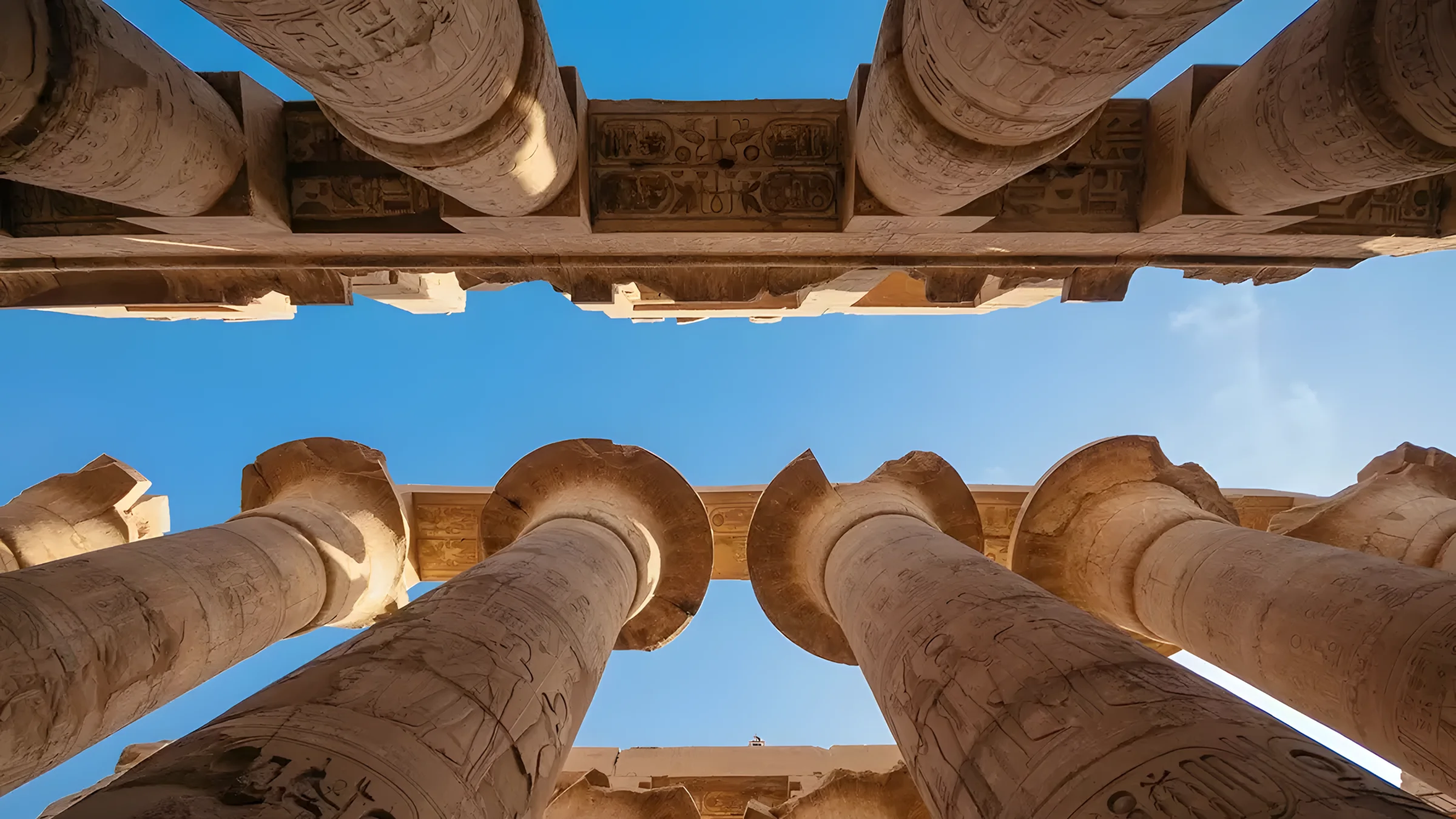
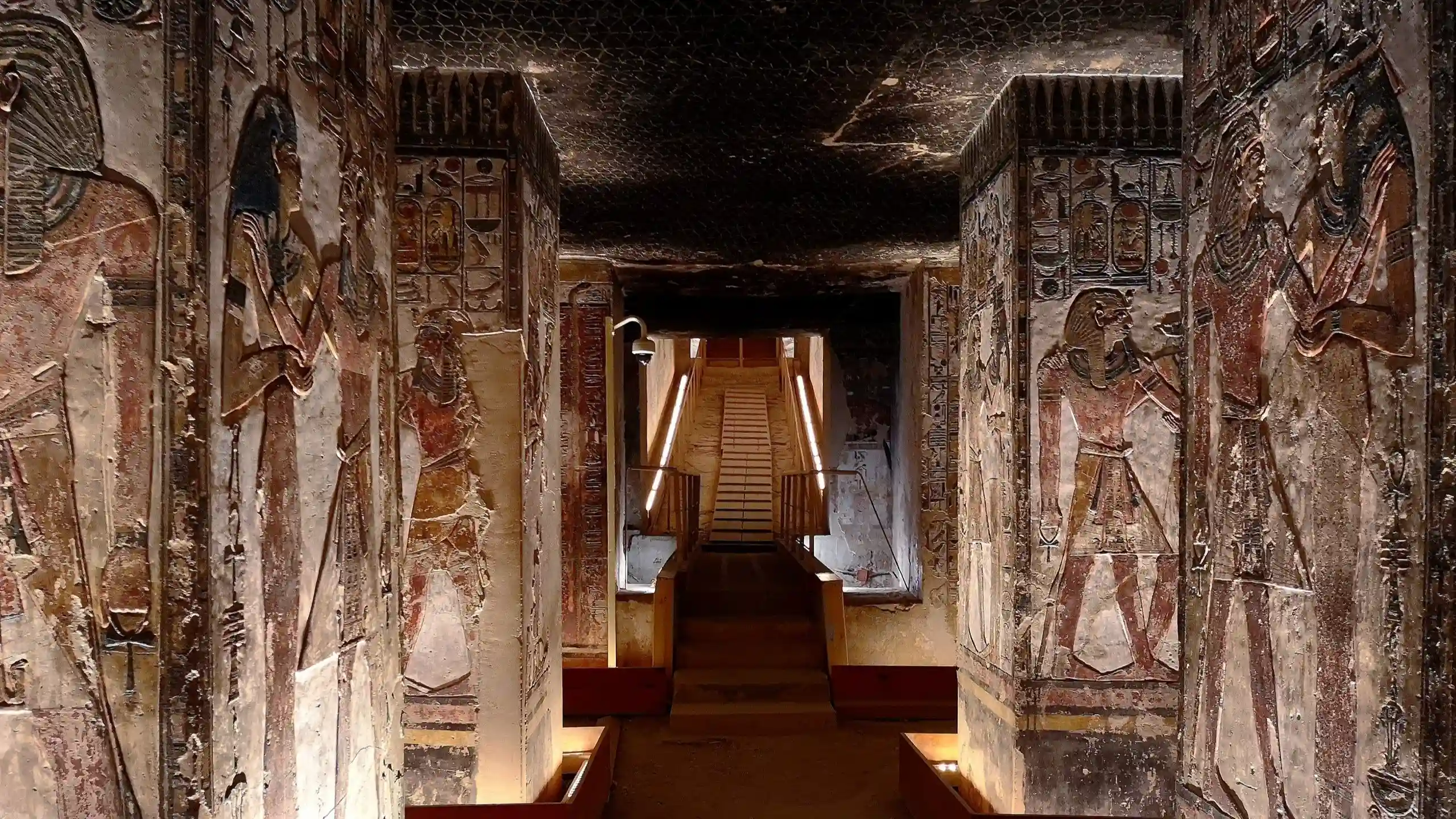
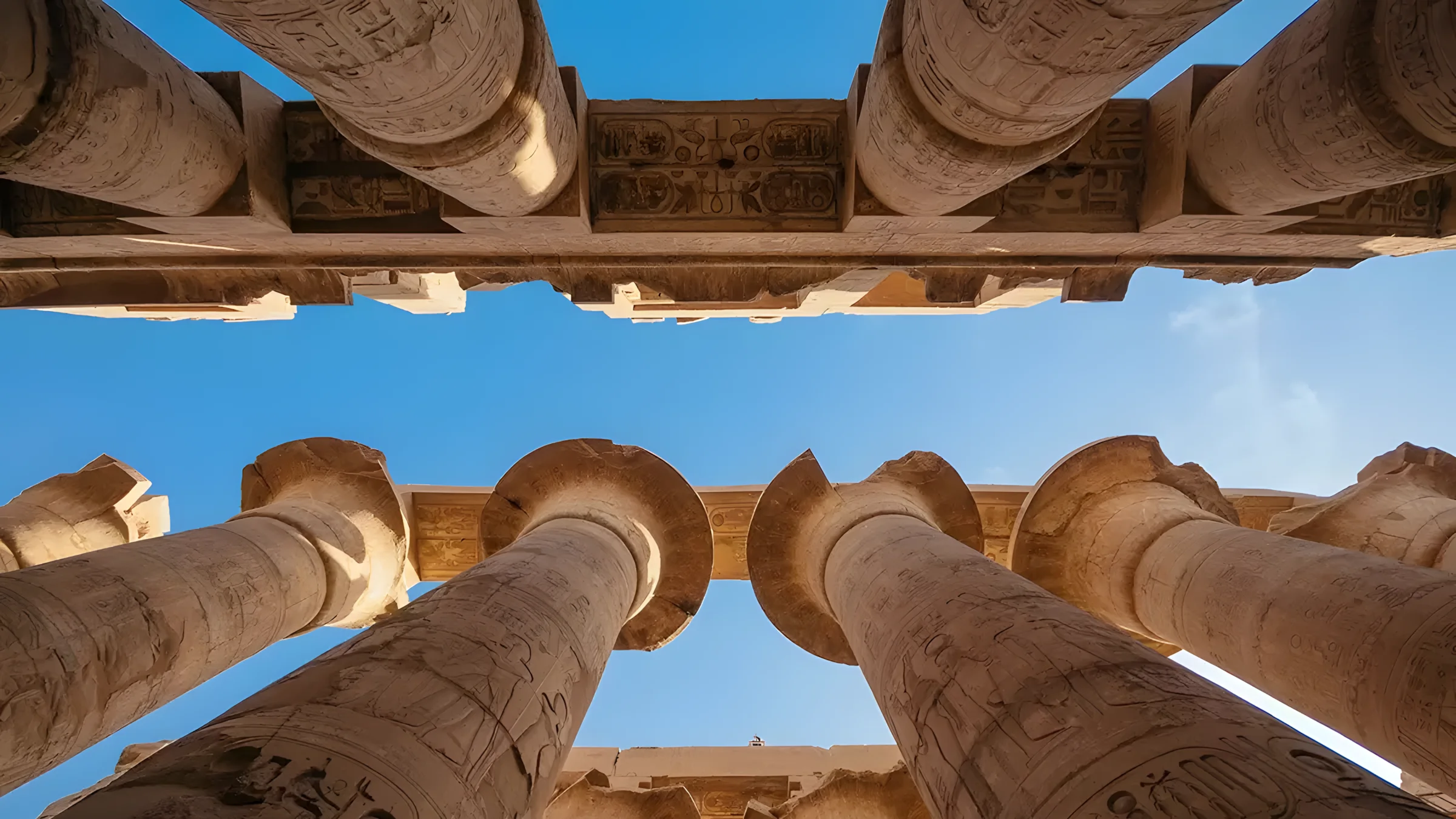
The Hypostyle Hall at Karnak has 134 columns, some of them 21 meters tall. You can read that number. It doesn't prepare you for walking into it. The painted walls of the royal tombs in the Valley of the Kings are exactly where they were carved 3,300 years ago. No reproduction has replicated what it's like to stand in one of those rooms. That's the distinction. A museum shows you things from a place. Luxor is the place.
The scale of what's here
To give a sense of what "most" actually means:
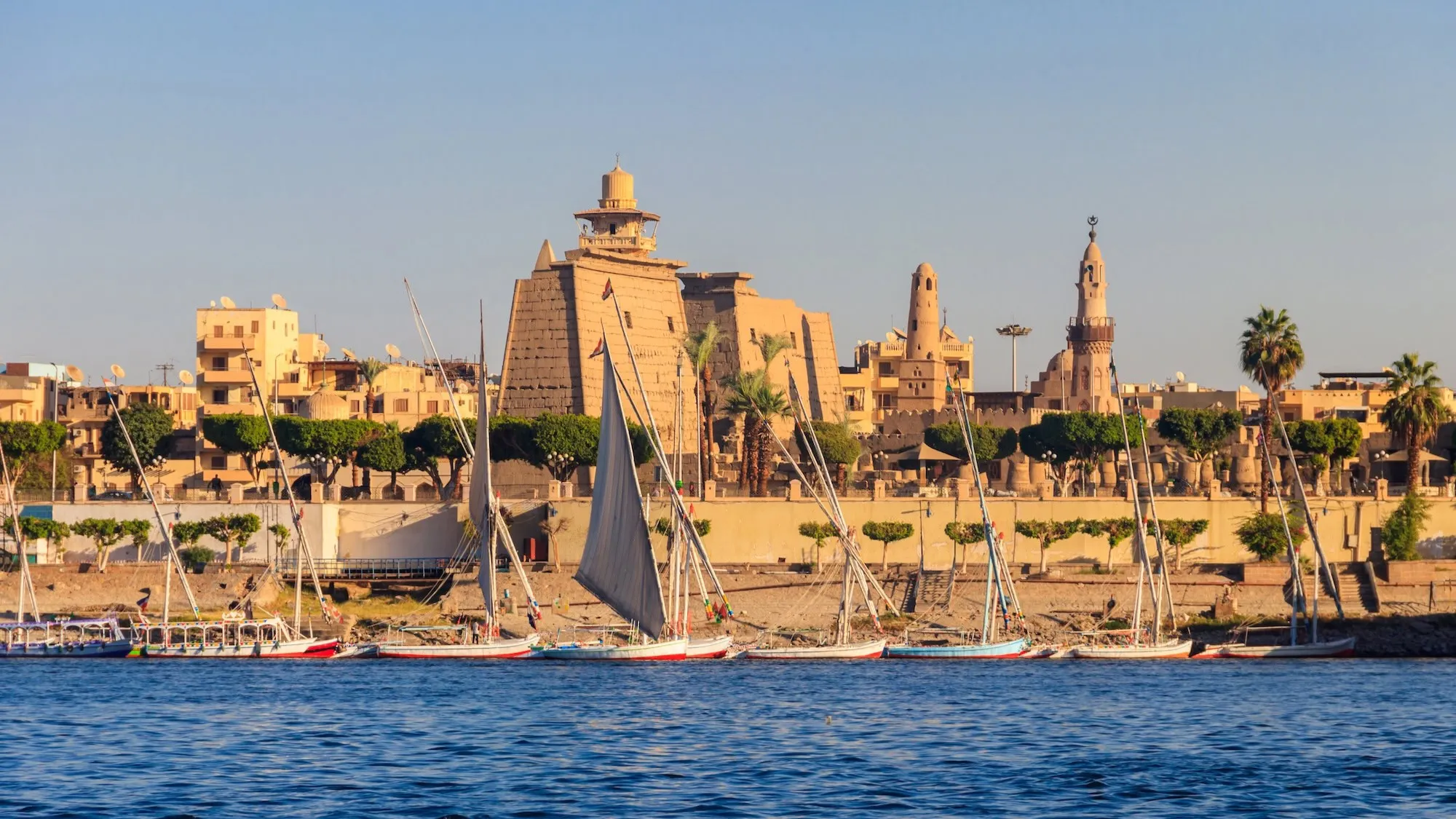
The east bank holds Karnak, one of the largest religious complexes ever built, and Luxor Temple, which has been in continuous use since the 14th century BCE
The west bank holds the Valley of the Kings (63 royal tombs), the Valley of the Queens (over 90 tombs), Hatshepsut's temple at Deir el-Bahari, Medinet Habu, the Ramesseum, the Workers' Village at Deir el-Medina, and dozens of private tombs belonging to nobles and officials
The Avenue of Sphinxes, 2.7 kilometers of sphinx-lined processional road linking the two great east-bank temples, was fully excavated and opened in 2021
Most first-time visitors cover Karnak, Luxor Temple, the Valley of the Kings, and Hatshepsut's temple. That's a meaningful fraction of what's accessible and a small fraction of what exists.
The east bank: monuments built to be seen
Karnak and Luxor Temple were public monuments. Processional spaces, civic and religious centers, built partly to impress the people who used them. Their scale was a statement.
The Great Hypostyle Hall is the one site that consistently leaves first-time visitors uncharacteristically quiet. It's large enough to contain the Notre-Dame cathedral of Paris. The columns are close enough to block sight lines, which makes the space feel interior and labyrinthine despite being open to the sky. In the early morning, when the light angles between the columns, it's genuinely one of the more extraordinary architectural experiences anywhere.
Luxor Temple is worth two visits: once in daylight to read the reliefs and understand the structure, and once at night, when the whole complex is illuminated and the sandstone takes on a quality it doesn't have under the sun. The Avenue of Sphinxes between the two temples is 2.7 kilometers of restored ancient processional road running through the middle of a working city. Walking it is one of the more quietly unusual things Luxor offers.
The west bank: built to last forever
The logic of the west bank is different. Where the east bank temples were meant to be visible and active, the west bank tombs were meant to be hidden, sealed, and protected for eternity. They were not built to be seen. They were built to work.
Every painted wall in the Valley of the Kings is a theological text. Every room in the descent is a stage in a journey through the underworld. The pharaohs who built these tombs spent decades and enormous resources preparing the infrastructure for their afterlife. Understanding even a fraction of the iconography changes what you're looking at: not "old painted walls" but a detailed argument about what happens after death.
Hatshepsut's temple makes an interesting contrast. Where the royal tombs were concealed, Deir el-Bahari was designed for visibility: three colonnaded terraces facing the Nile valley, aligned with Karnak across the river. Hatshepsut's image was systematically removed by her successor Thutmose III after her death, and the scale of what he tried to erase is itself a measure of how significant she was. Her temple is still here. So is the evidence of the erasure.
Still being discovered
One thing that separates Luxor from most major archaeological sites is that it's still actively being excavated. The broader Theban Necropolis covers an area several times larger than what most visitors see. New discoveries are reported regularly: a significant cache of New Kingdom coffins was found on the west bank in 2020; workers' tombs and officials' tombs are still being mapped; there are parts of the necropolis that haven't been systematically surveyed.
The Avenue of Sphinxes is the most visible recent example. For most of the 20th century, only sections of it were exposed; the rest lay under modern Luxor. The project that uncovered the full length displaced thousands of residents. The completed road opened in November 2021, more than three thousand years after it was last used in a procession. When you walk through Luxor now, you're walking through a city that's still being read.
What a museum can't give you
The Egyptian collections at the British Museum, the Metropolitan Museum of Art, and Cairo's Egyptian Museum are outstanding. Seeing the Rosetta Stone or the bust of Nefertiti is worth doing.
But a museum object is an extraction. It tells you what the Egyptians could do with stone and paint. What Luxor tells you is what they did with the landscape: how a temple was positioned in relation to a river, a cliff, a sunrise, and a corresponding monument 2.7 kilometers away. The Avenue of Sphinxes doesn't make sense in a gallery. The Valley of the Kings, where the shape of the valley itself was chosen to evoke the hieroglyph for "horizon," only makes sense if you're in it.
Programs that give you the time to see it properly
Our One Day in Luxor program covers the essential sites on both banks for visitors with limited time. For a deeper read of the east bank, the Luxor East Bank Tour covers Karnak and Luxor Temple with the guide time the Hypostyle Hall actually deserves. The Luxor West Bank Tour does the same for the Valley of the Kings, Hatshepsut's temple, and the Colossi of Memnon.
Most visitors who return to Egypt say they would have spent more time in Luxor. If you're planning a first visit, that's worth knowing in advance.
If you'd like help building a Luxor itinerary, or combining Luxor with Cairo or Aswan, tell us what you're thinking and we'll help you structure it.
Ready to plan a trip that fits you?
Start with a program, shape something more personal, or reach out if you want help choosing the right destination and pace.
Travelers Hosted
Curated Programs
Years of Experience
Average Rating